

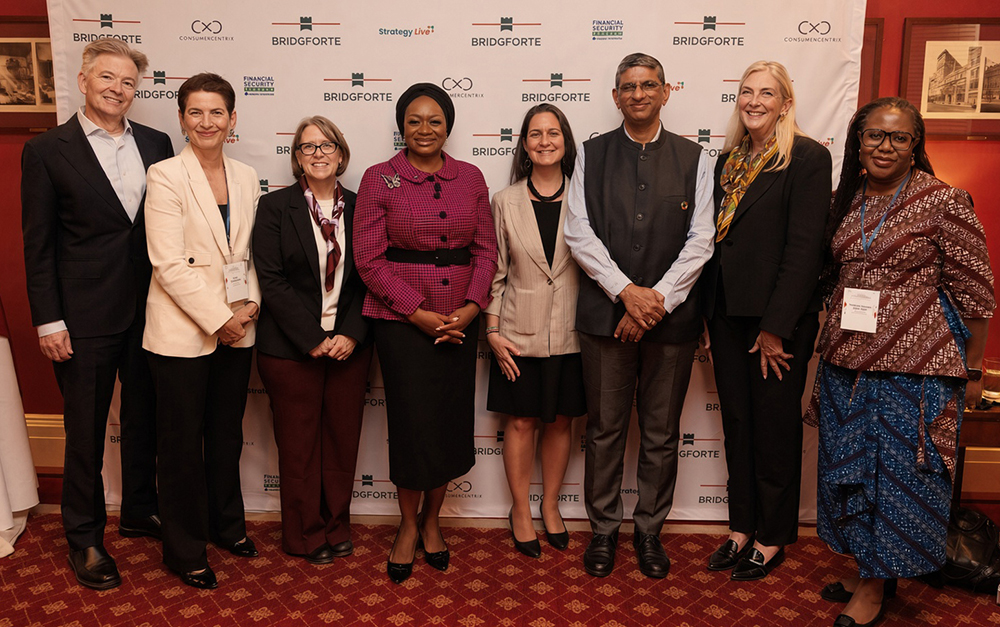
As digital finance expands, a central question is whether greater access is translating into lasting confidence and improved economic opportunity. Bridgforte’s Trust Architecture programme examines how the design and governance of financial systems shape those outcomes, with shared accountability and the measurement of trust central to its next phase of research.
Held on 23 September at the Harvard Club of New York City during the 81st session of the United Nations General Assembly, the second Bridgforte Dialogues brought together central bankers, financial institutions, payments and technology providers, researchers, consumer specialists and international development leaders to examine how trust is built and sustained across increasingly interconnected financial systems.
“Trust is not reputation, it is not communication. Trust is something that needs to be designed into a financial system,” said Aishah N. Ahmad, CFA, OFR, Founder of Bridgforte and former Deputy Governor of the Central Bank of Nigeria. “Bridgforte brings the people who build, govern and use that system into conversation, then turns the questions that emerge into research and work institutions can act on.”
In a recorded address, Dr Ngozi Okonjo-Iweala, Director-General of the World Trade Organization, connected trusted digital finance to trade and opportunities for smaller businesses. Digital payments and trade-finance platforms could reduce costs and widen participation, she said, but required “appropriate regulatory frameworks, interoperable payment infrastructures and international cooperation”.
Speaking from the floor, HRH Muhammadu Sanusi II, Emir of Kano and former Governor of the Central Bank of Nigeria, brought the question of economic opportunity to the household level. “You could have a lot of money moving around without people’s lives getting better,” he said. “Beyond trust,” he added, “it’s also about hope.” He urged participants to consider how financial inclusion could support credit, insurance, pensions and resilience, offering a credible path towards improved wellbeing.

Against that wider purpose, the discussions examined three questions: who is accountable when no institution controls the whole system; what institutions need to build together; and how to establish whether people trust the services available to them.
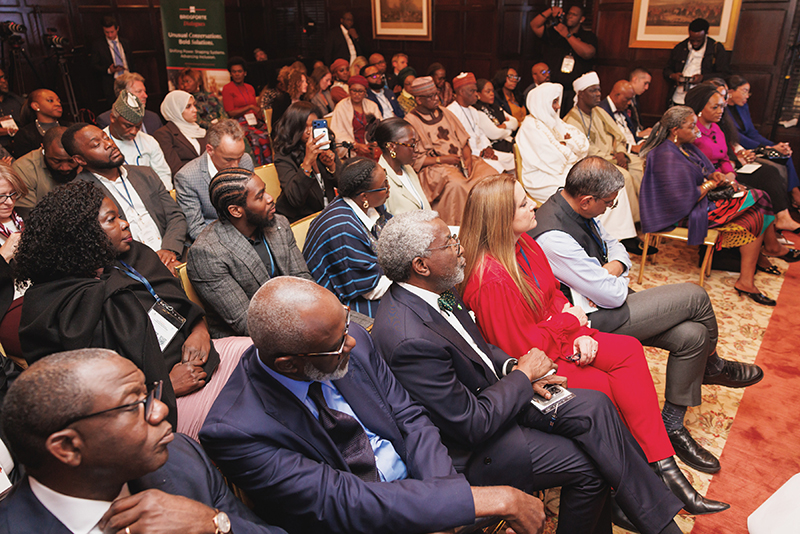
Responsibility must follow the customer
On accountability, the discussion focused on how responsibility should operate across the institutions involved in delivering a single financial service. Olugbenga Agboola, CEO and Co-Founder of Flutterwave, described payments as a chain of partnerships built on institutions trusting one another to honour payment instructions. In that sense, he observed, “trust is what is moving”.
That interdependence makes visibility across the payment chain important. Agboola described how shared performance information can reveal where transactions fail and prompt providers to act. Anna Gincherman of ConsumerCentriX addressed what makes such coordination work: clear leadership, benefits that participating institutions understand and practical agreements for sharing data. Her contribution extended the question to national financial inclusion strategies, where progress also depends on cooperation beyond the financial sector.
Together, these perspectives highlighted the need to connect institutional responsibilities around the customer’s experience, so that a problem can be explained and resolved without the customer being passed between providers.
Protection depends on shared capability
On shared capability, the focus was what institutions could build and govern together while continuing to compete. Ngover Ihyembe-Nwankwo, Executive Director at the Nigeria Inter-Bank Settlement System (NIBSS), described how common payment rails, identity validation and standards enable providers to connect and deliver services. Shared fraud alerts extend that infrastructure into protection, but their effectiveness depends on institutions responding and exchanging intelligence.
Sanjay Jain of the Gates Foundation drew a parallel with India’s experience of digital identity and payments. Infrastructure designed as reusable building blocks allows multiple providers to develop services on common foundations, he argued, with governance for public benefit central to its value.
Kate Griffin of the Aspen Institute Financial Security Program extended this reasoning beyond financial institutions. Because scams can begin on telecommunications networks and websites before a payment is made, she asked what shared capabilities the wider digital ecosystem needs. Jain’s call for stronger cooperation with law enforcement across jurisdictions reinforced the limits of addressing these risks within finance alone.
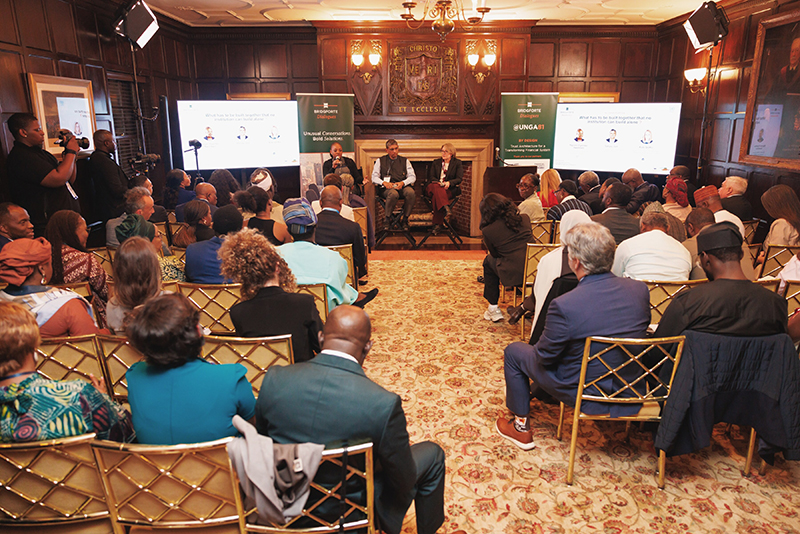
Confidence needs evidence of its own
On measurement, the discussion examined how to distinguish participation in financial services from confidence in them, and what people’s experiences and behaviour can reveal.
Tamara Cook of the Office of the UN Secretary-General’s Special Advocate for Financial Health illustrated this through customers who repeatedly check their balances to reassure themselves that their money is safe. Such behaviour needs to be understood in context. Reliable services and effective recourse help build confidence, she argued, while consumer education should not become a means of transferring responsibility for protection onto customers.
Darius Kingsley, Head of Consumer Fraud and Scam Prevention at JPMorganChase, explored how protective decisions can themselves shape trust. A bank may need to delay or refuse an authorised payment that it suspects is a scam, despite a customer’s initial resistance. “If you get it right and the customer realises it, it’s a huge trust multiplier,” he said.
Recorded contributions from Zainab Shamsuna Ahmed, a World Bank Group Executive Director; Dr Agnes Khunwana, Deputy Governor of the Bank of Botswana; Sauda Msemo, Deputy Governor of the Bank of Tanzania; and Lincoln Mali of Lesaka Technologies extended these observations into a measurement agenda. The segment proposed examining what people say, how they behave and how they respond under stress. Account ownership and transaction volumes remain useful measures of participation, but understanding whether people feel secure enough to depend on the system requires further evidence.
From dialogue to research and practice
These questions form part of Bridgforte’s ongoing Trust Architecture programme. Its first UNGA convening in 2025 informed practitioner dialogue in Lagos and the July 2026 report, Trust Architecture in Platform-Led Finance. The latest Dialogue brought that framework into conversation with international experience, refining the questions for further research and institutional engagement.
The programme draws on experience in Nigeria and other Global South markets to inform international thinking on how trust is built across interconnected financial systems. Bridgforte has begun publishing insights in its What We Heard series. Through its Trust Lab, it will develop and test ways to measure perceptions, behaviour and responses to stress, and work with institutions on how that evidence can inform governance and consumer protection.
Partners and moderators
The Dialogues were held in partnership with Lagos Business School, the Aspen Institute Financial Security Program, ConsumerCentriX and the Milken Institute.
The three conversations were moderated by Yinka Adegoke of Semafor, Kate Griffin of the Aspen Institute Financial Security Program and Professor Olayinka David-West, Dean of Lagos Business School.
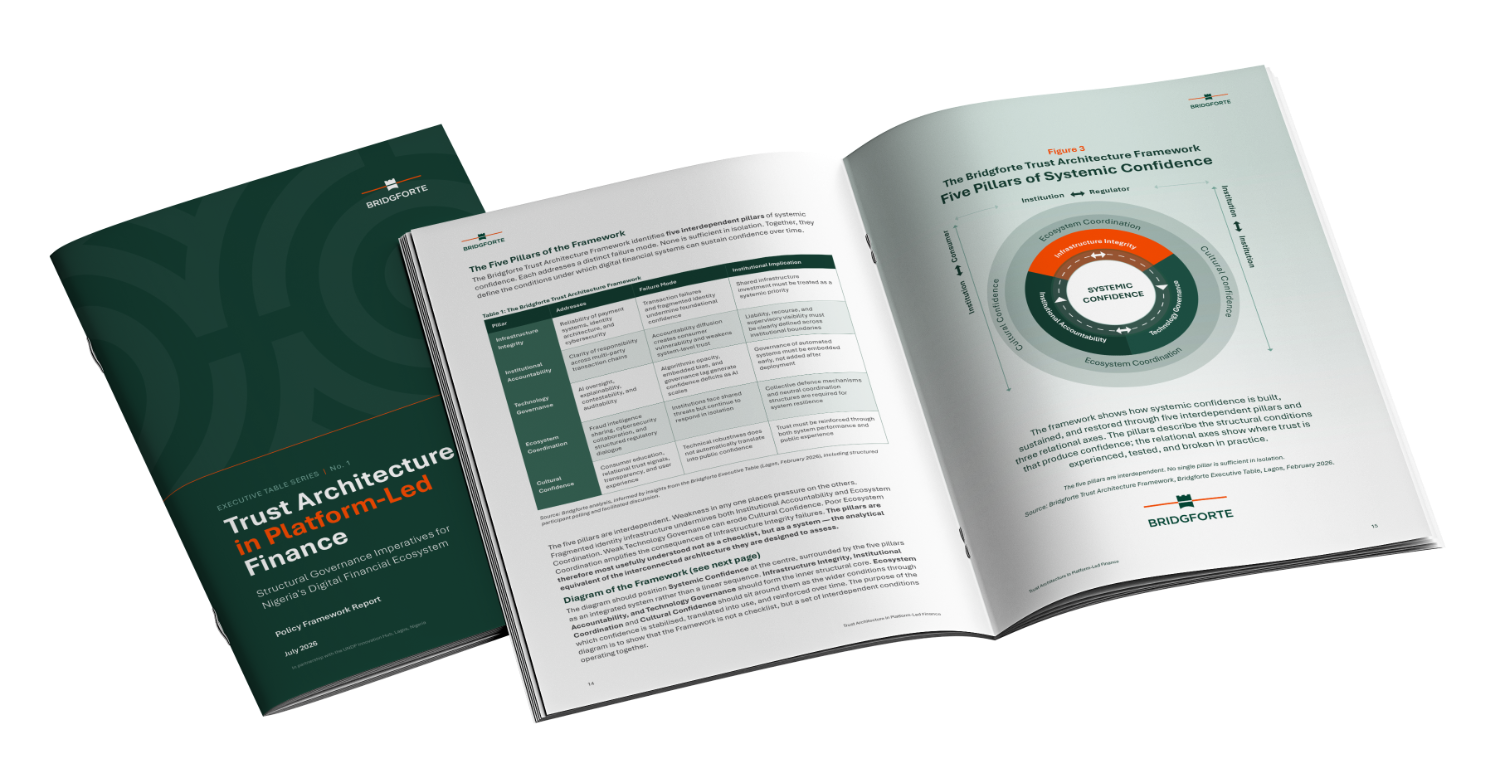 Related research: Trust Architecture in Platform-Led Finance